




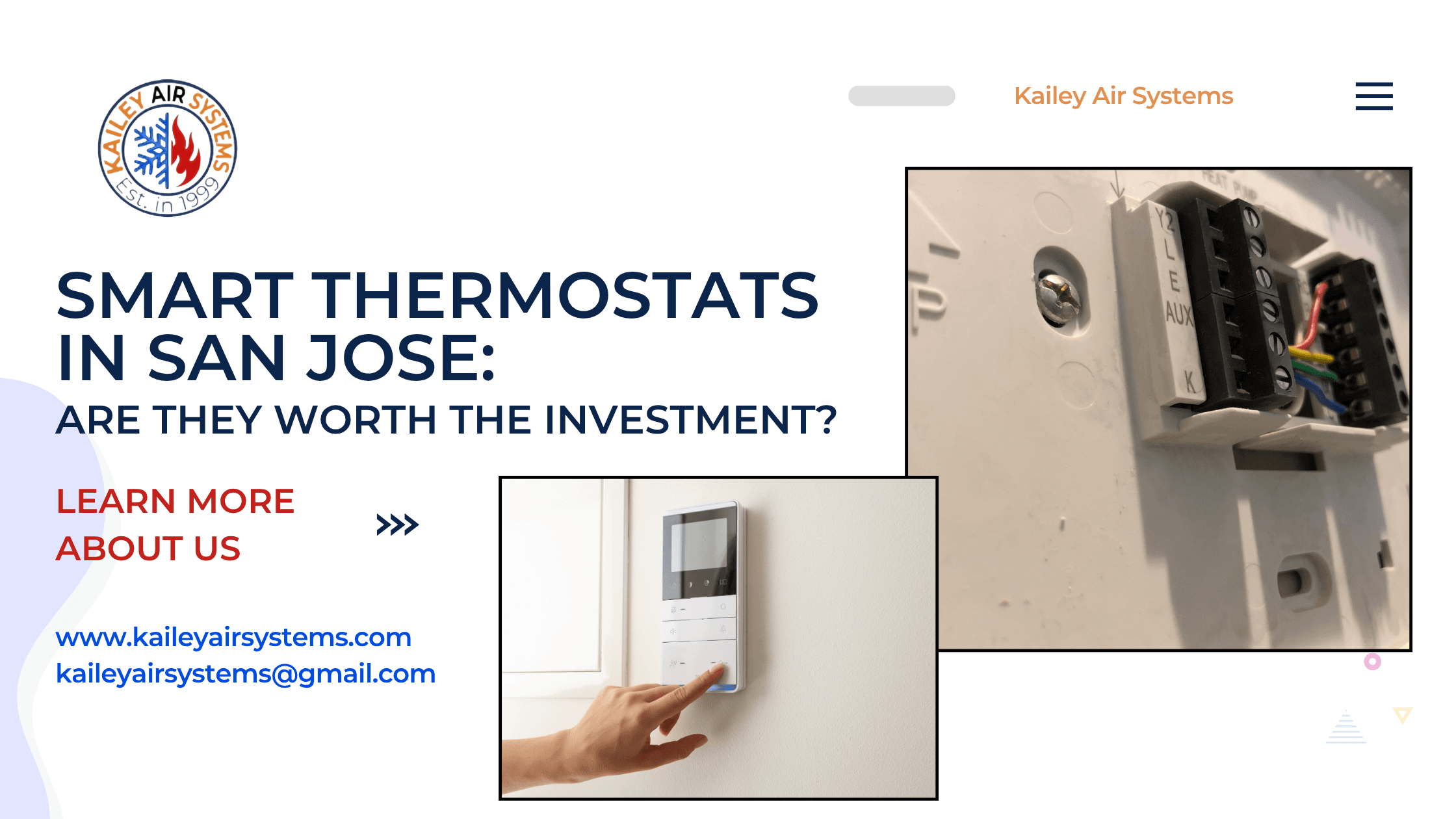
Yes, for most San Jose homeowners, a smart thermostat is worth the investment. A typical smart thermostat costs $150–$300 installed and saves the average Bay Area household 10–15% on heating and cooling costs per year, meaning most units pay for themselves within 12–18 months.
What a Smart Thermostat Actually Does
A smart thermostat learns your household's schedule and adjusts heating and cooling automatically, rather than running on a fixed timer or manual settings. Unlike a standard programmable thermostat, it can:
Learn your daily routine and build a schedule without manual programming
Detect when nobody is home and adjust temperature to save energy
Send alerts if your HVAC system is running unusually long (often an early sign of a repair need)
Be controlled remotely from a phone app
Track and report your monthly energy usage
How Much Do Smart Thermostats Save in the Bay Area?
Energy savings depend on your current system and habits, but industry data and utility studies consistently show a 10–15% reduction in heating and cooling costs after switching to a smart thermostat. In San Jose's mild climate, most of those savings come from smarter cooling schedules during summer heat spikes and avoiding unnecessary heating overnight in winter.
For a typical Bay Area home with an average monthly HVAC-related energy cost of $80–$120, that translates to roughly $100–$180 in annual savings.
Are There Rebates Available in California?
Yes. PG&E and other California utility providers periodically offer rebates or instant discounts on ENERGY STAR–certified smart thermostats. Rebate amounts and eligibility change throughout the year, so it's worth checking your utility provider's current rebate page before purchasing, or asking your HVAC technician what's currently available at the time of installation.
Smart Thermostat vs. Traditional Thermostat: Quick Comparison
Factor | Traditional Thermostat | Smart Thermostat |
|---|---|---|
Upfront cost | $20–$50 | $150–$300 (installed) |
Energy savings | Minimal, manual only | 10–15% average savings |
Remote control | No | Yes, via app |
Learns your schedule | No | Yes |
System diagnostics/alerts | No | Yes, on most models |
Rebate eligibility | Rarely | Often (ENERGY STAR models) |
Is Professional Installation Necessary?
While some smart thermostats are marketed as DIY-friendly, professional installation is recommended if:
Your home has an older HVAC system with non-standard wiring
You have a heat pump system (wiring is more complex than standard AC/furnace setups)
You want to ensure compatibility before purchasing, avoiding a return trip to the store
You want the thermostat properly calibrated to your specific system for maximum savings
A licensed HVAC technician can confirm compatibility, install the unit correctly, and configure it to your system in under an hour in most cases.
Frequently Asked Questions
Do smart thermostats work with older HVAC systems?
Most smart thermostats are compatible with systems built after 2000, but compatibility depends on your wiring setup (particularly the presence of a C-wire). A technician can confirm compatibility before installation.
Will a smart thermostat work with a heat pump?
Yes, most major smart thermostat brands support heat pump systems, but installation is more complex than a standard furnace/AC setup and professional installation is strongly recommended.
How long does installation take?
Most smart thermostat installations take 30–60 minutes when performed by a licensed technician.
Do smart thermostats really pay for themselves?
Based on average Bay Area energy costs and typical 10–15% savings, most smart thermostats pay for themselves within 12–18 months.
Kailey Air Systems has served the San Jose Bay Area since 1999. Our licensed technicians install and configure smart thermostats for all major HVAC systems, including heat pumps. Contact us for a free consultation and current rebate information.