




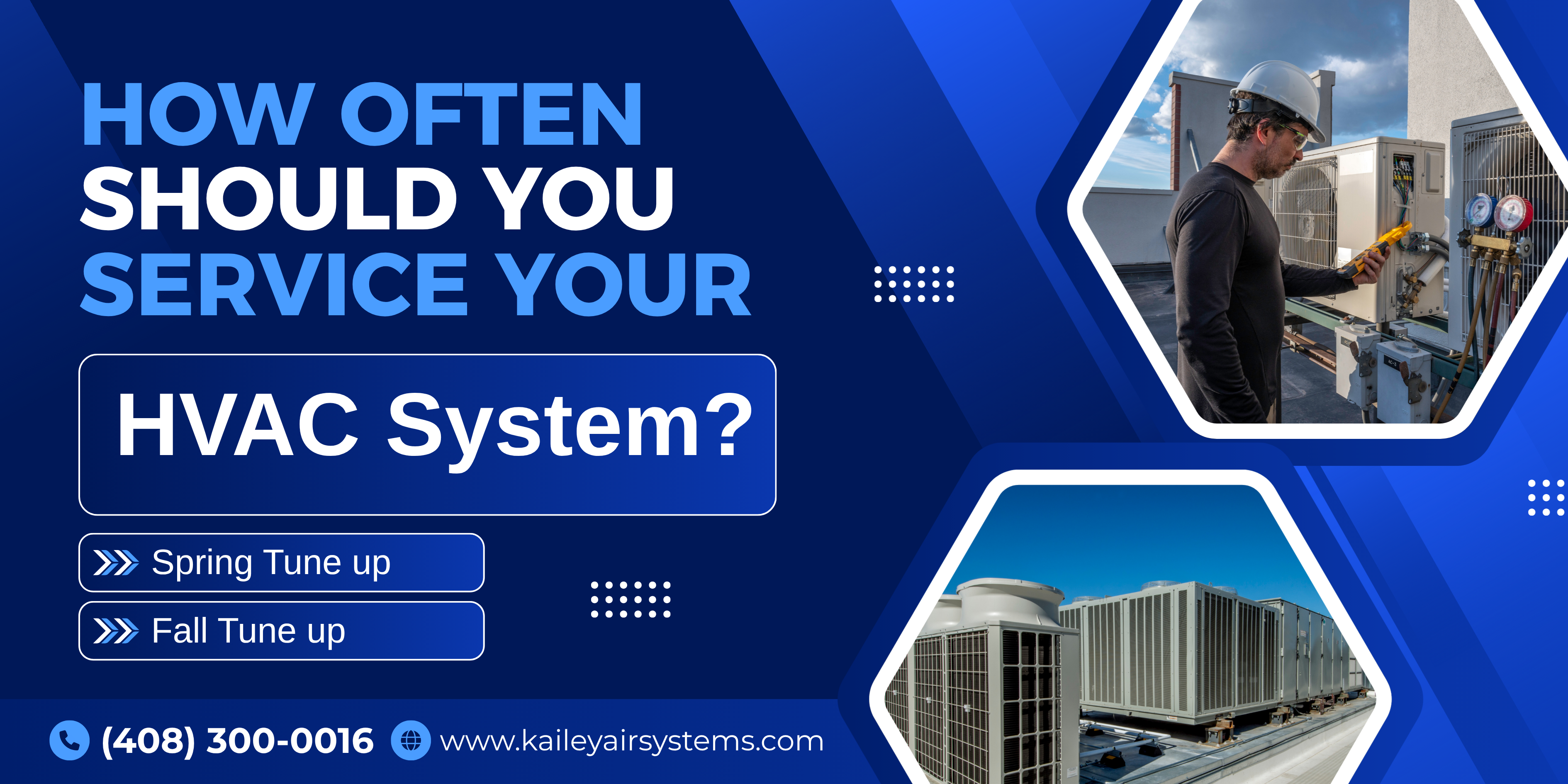
If you're wondering how often you should service your HVAC system, a good general guideline is to schedule professional maintenance at least once a year. For homes with separate heating and cooling equipment, many HVAC professionals recommend servicing the air conditioner in spring and the heating system in fall. Heat pumps and systems that provide both heating and cooling may benefit from maintenance twice a year.
Regular HVAC maintenance helps identify developing problems, maintain airflow and system performance, and reduce the risk of unexpected breakdowns during periods of heavy use.
If you've noticed unusual noises, weak airflow, inconsistent temperatures, or higher energy bills, you may need service sooner rather than waiting for your next scheduled appointment.
Twice a Year for Many Homes
For a typical home with separate air conditioning and heating equipment, a practical maintenance schedule is:
Spring: Service the air conditioner before the main cooling season
Fall: Service the furnace or heating system before colder weather arrives
This seasonal approach allows a technician to inspect the equipment before you depend on it heavily.
For a heat pump or other system that operates throughout much of the year, twice-yearly professional maintenance can be particularly useful because the equipment may be responsible for both heating and cooling.
The exact frequency can vary depending on the type, age, condition, and usage of your HVAC system.
Why Schedule HVAC Maintenance Twice a Year?
1. Prepare Your System for Each Season
Your air conditioner and heating system may experience their heaviest use during different parts of the year.
A spring AC tune-up gives your cooling system an opportunity to be inspected before summer demand increases. A fall heating inspection can help identify problems before you begin relying heavily on your furnace or heat pump.
2. Catch Small Problems Early
Routine maintenance allows a technician to identify issues such as dirty coils, restricted airflow, electrical problems, clogged condensate drains, or refrigerant-related concerns before they potentially become larger problems.
Finding a problem during a scheduled maintenance visit may be easier and less disruptive than discovering it when your system stops working on a very hot or cold day.
3. Maintain System Performance
Dust, dirt, restricted airflow, and normal component wear can affect how an HVAC system operates.
Cleaning and inspecting important components can help the system maintain proper airflow and performance while also identifying areas that may require repair.
4. Help Protect Your Equipment
An HVAC system represents a significant investment. Regular maintenance can help identify developing mechanical or electrical problems and may reduce unnecessary wear on components.
Maintenance does not guarantee that a system will never break down, but it can help you stay ahead of problems and understand the condition of your equipment.
What Happens During a Professional HVAC Tune-Up?
The exact maintenance checklist varies depending on the equipment and service provider, but a professional HVAC maintenance visit may include:
Air filter inspection — checking whether the filter needs cleaning or replacement
Thermostat inspection — verifying proper operation and temperature control
Electrical inspection — checking electrical connections and system components
Coil inspection and cleaning — removing dirt and debris that can affect system performance
Refrigerant system inspection — checking for signs of refrigerant-related problems
Condensate drain inspection — checking for blockages that could cause drainage or humidity problems
Blower and airflow inspection — verifying that the system is moving air properly
Ductwork inspection — looking for visible issues that may affect airflow
Heating safety inspection — checking important furnace components and safety controls when applicable
Overall system performance check — evaluating whether the equipment is operating as expected
Not every maintenance visit includes every task. The checklist should be appropriate for your specific HVAC equipment.
How Often Should You Change Your HVAC Filter?
Air filters generally need more frequent attention than professional HVAC servicing.
A good starting point is to check your filter about once a month, particularly during periods of heavy heating or cooling use. Many standard filters can last up to around three months, but the correct replacement interval depends on the filter type, system, household conditions, and how quickly the filter becomes dirty.
You may need to replace the filter more frequently if you have:
Pets
Multiple household members
Allergies or indoor air-quality concerns
High levels of dust
Frequent HVAC usage
A filter that becomes visibly dirty quickly
A dirty filter can restrict airflow and make your HVAC system work harder.
If you're unsure how often your particular filter should be replaced, check the manufacturer's instructions or ask an HVAC professional.
Signs Your HVAC System Needs Service Sooner
A scheduled maintenance appointment is not a reason to ignore obvious problems.
You should consider contacting an HVAC professional sooner if you notice:
Unusual Noises
Banging, grinding, squealing, buzzing, or other unusual sounds can indicate a mechanical or electrical problem.
Weak or Uneven Airflow
If certain vents have significantly weaker airflow than others, there may be an issue involving the filter, blower, ductwork, or another part of the system.
Higher Energy Bills
If your heating or cooling costs have increased without a significant change in usage, declining system performance may be one possible cause.
Warm Air From the AC
If your air conditioner is running but producing warm or insufficiently cool air, the system should be inspected.
Frequent Cycling
If the HVAC system turns on and off more frequently than usual, there may be an issue with airflow, thermostat operation, system sizing, or another component.
Unusual Smells
Musty, burning, or unusual odors coming from your HVAC system should be investigated rather than ignored.
Water Around the Indoor Unit
Water around the indoor HVAC equipment can indicate a condensate drainage problem or another issue that requires professional attention.
Does Regular HVAC Maintenance Save Money?
Regular maintenance can help your HVAC system operate properly and may reduce the likelihood of certain avoidable problems.
A professional inspection can identify dirty components, restricted airflow, electrical issues, drainage problems, and other conditions that may affect system performance.
Maintenance can also help homeowners understand when an aging system is beginning to require more repairs. This can give you time to compare repair and replacement options instead of being forced into an emergency replacement.
However, maintenance is not a guarantee of lower energy bills or zero repairs. The condition and efficiency of the equipment, ductwork, insulation, thermostat settings, and home itself all influence energy consumption.
What About Older HVAC Systems?
Older HVAC systems generally deserve closer attention because components experience more wear over time.
If your system is around 10 years old or older, regular professional inspections can help you monitor its condition and identify developing problems.
You may want to discuss replacement planning with your HVAC contractor if you are experiencing:
Frequent repairs
Increasing operating costs
Declining cooling or heating performance
Repeated component failures
Difficulty maintaining comfortable indoor temperatures
Major component problems
An older system does not automatically need replacement. If it is operating reliably and efficiently, continued maintenance may still be appropriate.
The important thing is to evaluate the overall condition of the equipment rather than replacing it based on age alone.
Bay Area HVAC Maintenance Considerations
Bay Area homeowners can experience a combination of warm summer temperatures and cooler conditions during other parts of the year. That means HVAC systems may be used for both cooling and heating depending on the season.
For homeowners in areas such as San Jose, Santa Clara, Sunnyvale, and Mountain View, a practical maintenance schedule can be:
Spring: Schedule AC maintenance before the main summer cooling season
Fall: Schedule heating maintenance before colder weather arrives
Throughout the year: Monitor filters, airflow, unusual sounds, odors, and changes in system performance
Homes near coastal areas may also need to pay attention to outdoor equipment because moisture and environmental exposure can contribute to corrosion over time.
Your home's location, HVAC equipment, usage, and system condition should determine the exact maintenance schedule.
Should You Get an HVAC Maintenance Plan?
A maintenance plan can make it easier to stay on schedule, especially if you do not want to remember when your next HVAC service is due.
Depending on the company and plan, HVAC maintenance agreements may include benefits such as:
Scheduled seasonal maintenance
Priority service
Discounts on repairs or parts
Regular system inspections
Reminders for upcoming maintenance
Additional service benefits
Before signing up, check exactly what the plan includes, how many maintenance visits are provided, and whether repair costs are covered separately.
Frequently Asked Questions
How often should I service my AC?
A professional AC inspection and maintenance visit is generally recommended once a year, ideally in spring before the main cooling season. Homes with heat pumps or systems that operate heavily throughout the year may benefit from twice-yearly maintenance.
How often should I service my furnace or heater?
A furnace should generally receive professional maintenance once a year, ideally in early fall before the heating season begins. This allows potential issues to be identified before the system is used heavily.
Can I skip HVAC maintenance if my system seems fine?
It is better not to skip routine maintenance simply because the system appears to be working normally. Some problems may not become obvious until they affect performance or cause a breakdown.
How often should I change my HVAC filter?
Check your filter about once a month. Depending on the filter and household conditions, replacement may be needed every one to three months. Homes with pets, high dust levels, or other indoor-air-quality concerns may require more frequent replacement.
Is HVAC maintenance worth the cost?
Regular HVAC maintenance can help maintain system performance, identify developing problems, and reduce the likelihood of certain unexpected repairs. It can also help you understand the condition of an aging system before a major failure occurs.
How often should a heat pump be serviced?
Heat pumps can benefit from professional maintenance twice a year because they may provide both heating and cooling throughout the year. Spring and fall are practical times to schedule service.
What happens if I don't service my HVAC system?
Skipping maintenance can allow dirt buildup, restricted airflow, drainage problems, electrical issues, and other developing problems to go unnoticed. Over time, these issues may affect comfort, efficiency, reliability, or equipment lifespan.
How to Keep Your HVAC System Running Properly
Professional maintenance is only one part of HVAC care. Homeowners can also take several simple steps between service visits:
Check your HVAC filter regularly
Replace dirty filters when necessary
Keep the outdoor unit clear of leaves, grass, and debris
Keep supply and return vents unobstructed
Pay attention to unusual noises or odors
Monitor changes in airflow
Avoid ignoring repeated system cycling
Schedule professional service when performance changes
These simple habits can help you identify problems earlier and keep your HVAC system operating properly between professional maintenance appointments.
HVAC Maintenance: Making the Right Choice for Your Home
The best HVAC maintenance schedule depends on your equipment, usage, age, and home environment. For many homes with separate heating and cooling systems, scheduling AC maintenance in spring and heating maintenance in fall provides a practical twice-yearly routine.
If you have a heat pump or another system that operates throughout the year, twice-yearly professional maintenance can be especially beneficial.
Regular filter checks, attention to system performance, and timely professional inspections can help you stay ahead of developing HVAC problems.
If your system is making unusual noises, producing weak airflow, cycling frequently, or struggling to maintain comfortable temperatures, don't wait for the next scheduled maintenance appointment. Having the system inspected now can help identify the cause before it becomes a larger problem.
Schedule HVAC Maintenance With Kailey Air Systems
Need professional HVAC maintenance in the Bay Area?
Kailey Air Systems provides HVAC services for homeowners who need routine maintenance, AC service, heating service, repairs, and system replacement.
Whether you're preparing your AC for summer or getting your heating system ready for cooler weather, professional maintenance can help you understand your system's condition and keep your home comfortable throughout the year.
Call Kailey Air Systems at (408) 300-0016 or request an HVAC service appointment today.