




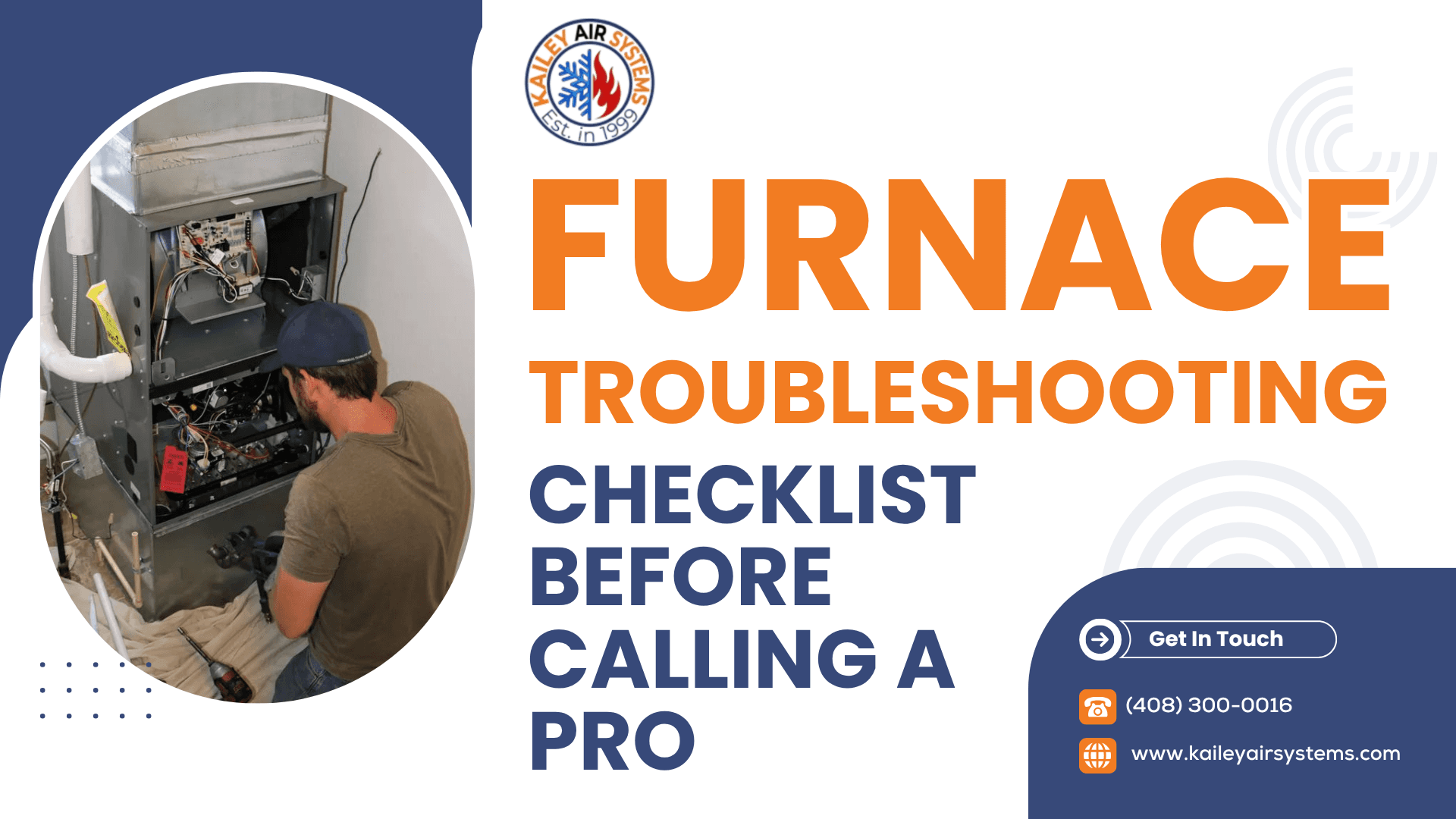
Not every cold house means an expensive repair bill. Some furnace problems can be safely checked in five minutes — and knowing the difference between a quick fix and a real furnace repair near me situation can save you both time and money. Here's the exact checklist to run through before you pick up the phone.
"Start with the thermostat, breaker, and air filter — these three cause the majority of "furnace not working" calls. If those check out and you smell gas, hear grinding/banging, or see a flickering yellow flame, stop troubleshooting and call a licensed technician immediately."
The Safe DIY Checklist
☐ Step 1: Check the Thermostat
Confirm it's set to Heat, not Cool or Off
Set the target temperature at least 5°F above current room temperature
Replace the batteries if the display is dim or blank
If it's a smart thermostat, confirm it's connected to Wi-Fi and not stuck mid-update
☐ Step 2: Check the Breaker and Switch
Look for a tripped breaker labeled "Furnace" or "HVAC" in your electrical panel
Check the furnace service switch (looks like a light switch, usually near the unit or at the top of the basement stairs) — make sure it hasn't been accidentally turned off
☐ Step 3: Inspect the Air Filter
A clogged filter is one of the single most common causes of both weak airflow and full system shutdowns
If it's visibly gray or clogged, replace it — this alone resolves a large share of furnace repair calls
Recommended replacement: every 60–90 days
☐ Step 4: Check the Pilot Light or Ignitor (Visual Only)
On older furnaces, confirm the pilot light is lit and burning blue, not yellow
On newer furnaces with electronic ignition, listen for a clicking sound followed by a soft "whoosh" — no whoosh means the ignitor may have failed
Do not attempt to relight a pilot light if you smell gas
☐ Step 5: Check Vents and Registers
Make sure furniture, rugs, or curtains aren't blocking supply vents
Confirm return air vents are also unobstructed — restricted return airflow strains the whole system, not just the furnace
☐ Step 6: Listen for Unusual Sounds
Clicking without ignition: possible ignitor or gas valve issue
Banging: delayed ignition, often gas buildup igniting at once
Squealing: worn blower motor belt or bearing
Grinding: motor bearing failure — turn the system off and call for hvac system repair
☐ Step 7: Check for a Reset Button
Many furnaces have a small reset button on the blower housing
Press it once — if the furnace starts and shuts off again shortly after, don't keep resetting it. Repeated shutdowns are a safety feature, not a glitch to override.
Stop Immediately If You Notice These
Some symptoms mean it's time to stop troubleshooting and call a professional right away:
Gas smell (rotten egg odor) — leave the house and call your gas utility or 911 before calling for repair
Carbon monoxide alarm going off — evacuate immediately
Yellow, flickering, or sooty flame — sign of incomplete combustion
Burning smell that doesn't fade after the first few minutes of use
Visible sparking near the unit
These aren't DIY situations — they require a licensed technician, and in gas-smell or CO-alarm cases, immediate evacuation.
When the Checklist Doesn't Fix It
If you've gone through every step and the furnace still isn't working properly, the issue is likely internal — a failed ignitor, cracked heat exchanger, faulty control board, or blower motor problem. At that point, a professional diagnostic is the fastest way to get an accurate answer instead of guessing at parts.
Frequently Asked Questions
Is it safe to troubleshoot a furnace myself?
Basic checks — thermostat, breaker, filter, vents — are safe for any homeowner. Anything involving the gas line, flame sensor removal, or the internal control board should be left to a licensed technician.
Why does my furnace turn on and then shut off quickly?
This is called short cycling, and it's most often caused by a dirty filter, a failing thermostat sensor, or an oversized furnace. If replacing the filter doesn't help, it needs a professional look.
How often should I replace my furnace filter?
Every 60–90 days for standard filters, or monthly if you have pets or allergy concerns. This single habit prevents a large percentage of furnace repair near me service calls.
When should I stop troubleshooting and call for furnace repair?
Stop immediately if you smell gas, hear grinding, see a yellow or sooty flame, or if the furnace keeps shutting off after a filter change and reset. These indicate an internal issue that needs professional diagnosis.
Still Not Working? Get a Same-Day Diagnostic in San Jose
If your furnace isn't responding after running through this checklist, Kailey Air Systems provides 24/7 emergency furnace repair across San Jose and the greater Bay Area, with upfront pricing and no after-hours surcharge.
Call (408) 300-0016 for same-day service, or schedule online.