

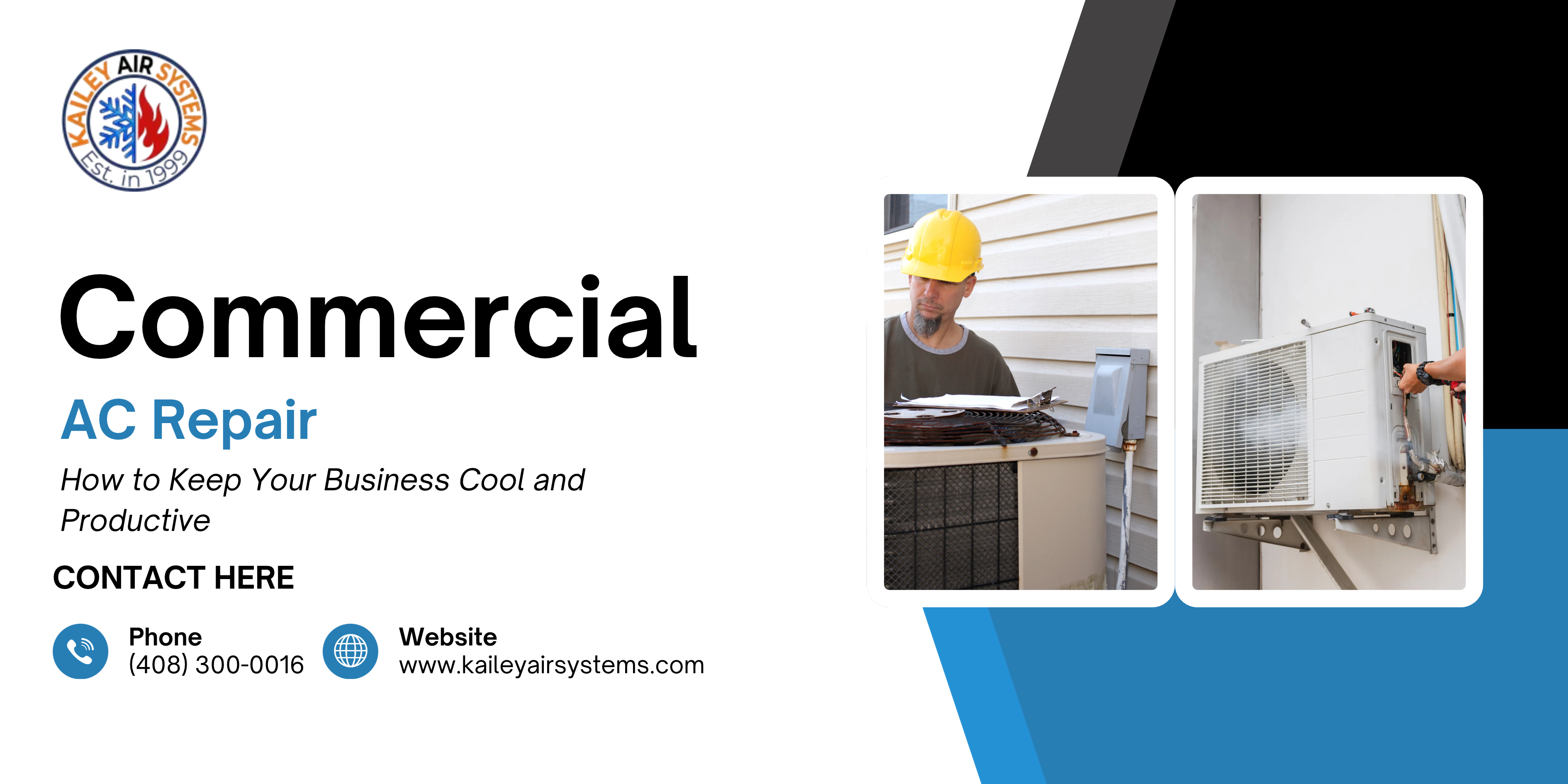
A properly functioning air conditioning system is essential for maintaining a comfortable commercial environment. Offices, retail stores, restaurants, warehouses, and other business facilities rely on effective cooling to support daily operations and provide a pleasant experience for employees and customers. When a commercial AC system develops a fault, it can lead to uncomfortable indoor temperatures, reduced productivity, and unexpected operating expenses.
Professional commercial AC repair helps businesses identify cooling problems, restore system performance, and minimize disruption. For businesses in San Jose, California, addressing air conditioning issues promptly is particularly important during periods of warm weather.
Kailey Air Systems provides commercial HVAC repair and related services for businesses throughout the San Jose Bay Area. Understanding common commercial AC problems, repair options, and preventive maintenance practices can help facility managers make informed decisions about their cooling equipment.
What Is Commercial AC Repair?
Commercial AC repair involves diagnosing and correcting problems affecting air conditioning systems used in business and commercial buildings. These systems are often larger and more complex than residential units because they must support greater cooling loads, multiple zones, and varying occupancy levels.
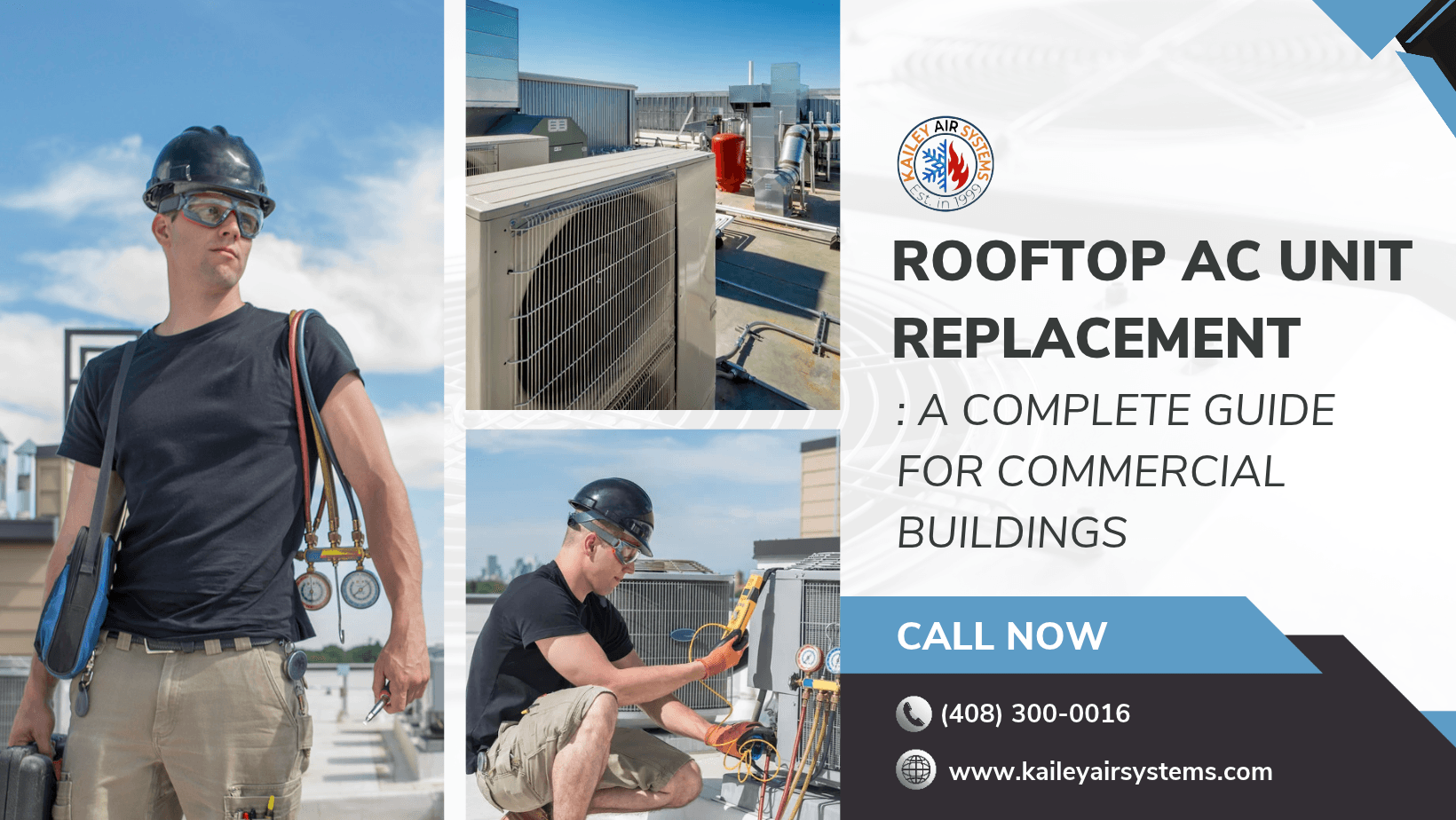
Depending on the building, commercial air conditioning equipment may include rooftop units (RTUs), packaged HVAC systems, split systems, variable air volume (VAV) controls, and centralized cooling equipment.
A professional repair service may involve inspecting electrical components, evaluating airflow, testing thermostats and control systems, examining motors, and checking refrigeration components. The objective is to identify the underlying fault and recommend an appropriate solution.
Working with a qualified commercial HVAC technician can help businesses address equipment problems before they cause more extensive disruption.
Common Commercial Air Conditioning Problems
Recognizing early warning signs can help business owners and facility managers determine when to arrange a professional inspection.
1. Inconsistent Cooling Across Different Areas
If one part of a building feels cold while another remains warm, the problem may involve zoning controls, thermostat settings, restricted airflow, ductwork, or equipment performance.
Commercial buildings often have different heating and cooling requirements across offices, meeting rooms, retail areas, and other occupied spaces. A technician can evaluate the system's air distribution and controls to identify the source of uneven temperatures.
2. Rising Energy Bills
An unexpected increase in electricity costs may indicate that a commercial air conditioning system is working harder than necessary. Dirty coils, restricted filters, failing components, control problems, and poor maintenance can contribute to inefficient operation.
Energy costs can also change because of weather, occupancy, operating hours, or utility rates. A professional HVAC assessment can help determine whether equipment performance is contributing to higher consumption.
3. Unusual Noises From HVAC Equipment
Grinding, rattling, buzzing, or banging sounds may indicate loose components, motor problems, worn bearings, or other mechanical faults.
Ignoring unusual noises can allow some problems to worsen. If equipment begins making persistent or unusually loud sounds, arrange an inspection and follow the technician's advice about whether the system should remain in operation.
4. Weak Airflow
Poor airflow can affect temperature consistency and make commercial spaces uncomfortable. Potential causes include clogged filters, blocked air passages, blower problems, ductwork restrictions, and malfunctioning dampers.
A technician can inspect the air distribution system and determine which components require cleaning, adjustment, or repair.
5. Frequent System Cycling
An air conditioner that starts and stops repeatedly may have a thermostat issue, restricted airflow, control problems, incorrect system sizing, or another underlying fault.
Frequent cycling can interfere with temperature control and may increase equipment wear. Professional diagnostics can help identify the cause and establish the appropriate corrective action.
Why Timely Commercial AC Repair Matters
Commercial air conditioning problems can affect more than indoor comfort. For many businesses, reliable cooling supports employee working conditions, customer satisfaction, equipment operation, and day-to-day productivity.
Prompt repairs offer several potential benefits.
Reduced operational disruption: Addressing cooling problems early can help limit the time a building operates without adequate air conditioning.
Better temperature control: Repairing faulty components can help restore more consistent indoor conditions.
Support for energy efficiency: Correcting equipment faults and airflow restrictions may reduce unnecessary energy consumption.
Protection of business equipment: Certain commercial environments, including server rooms and facilities containing temperature-sensitive equipment, require appropriate environmental controls.
Equipment longevity: Addressing developing faults may prevent additional stress on other components, although the outcome depends on the nature and severity of the problem.
The appropriate response will depend on the system, the fault, and the operational requirements of the building.
What Does Commercial AC Repair Involve?
A structured repair process helps businesses understand the condition of their equipment and the work required.
Step 1: Initial Assessment
The technician gathers information about the symptoms, equipment type, affected areas, and operating conditions. This helps establish the initial diagnostic priorities.
Step 2: System Diagnostics
The technician inspects relevant components, which may include thermostats, electrical controls, condenser units, air handlers, motors, and airflow systems. Additional testing may be needed to diagnose refrigeration or compressor problems.
Step 3: Repair Recommendations and Estimate
After identifying the problem, the HVAC provider explains the recommended repair, available alternatives, and estimated costs. For commercial facilities, it can be useful to document the expected work and coordinate approvals with the property or facility manager.
Step 4: Repair and Performance Testing
The technician completes the approved work and checks system operation. Testing may include evaluating airflow, temperature performance, controls, and other relevant operating parameters.
Step 5: Maintenance Recommendations
If the inspection identifies recurring issues or maintenance concerns, the technician may recommend appropriate follow-up service to help reduce the risk of future breakdowns.
Commercial AC Repair for Different Business Properties
Different commercial facilities have different cooling requirements, and the repair strategy should reflect the building's use and equipment.
Office Buildings
Offices need reasonably consistent indoor temperatures across workstations, meeting rooms, and shared spaces. Commercial AC repair can help address uneven cooling, faulty controls, and airflow problems that affect employee comfort.
Retail Stores and Restaurants
Retail businesses depend on comfortable indoor environments for customers and staff. Restaurants may also have additional ventilation and heat-load requirements. A suitable repair plan should account for operating hours, occupancy, and the type of equipment installed.
Warehouses and Industrial Facilities
Large facilities can have substantial cooling loads and different temperature requirements across work areas. HVAC professionals can assess the equipment, airflow distribution, and control settings to identify suitable repair options.
Server Rooms and Equipment Areas
Rooms containing sensitive electronics may require more carefully controlled environmental conditions. Cooling failures in these spaces should be assessed promptly according to the equipment's temperature and humidity requirements.
How Preventive Maintenance Helps Avoid Costly Breakdowns
Preventive maintenance is an important part of managing commercial HVAC equipment. Regular inspections can reveal developing issues before they cause unexpected failures.
A maintenance visit may include inspecting and replacing filters as required, checking electrical connections, examining coils, testing controls, evaluating airflow, and inspecting condensate drainage.
For rooftop HVAC units, technicians may also inspect accessible mechanical components and verify overall system operation.
The appropriate maintenance frequency depends on equipment type, operating hours, environmental conditions, manufacturer guidance, and the demands of the facility. Businesses with extended operating hours or critical cooling requirements may need a more tailored maintenance schedule.
A preventive maintenance agreement can help facility managers plan service visits, document equipment condition, and budget for routine HVAC care.
Choosing a Commercial AC Repair Company in San Jose
Selecting the right HVAC contractor is important for businesses that depend on reliable cooling.
Before hiring a provider, consider these factors:
Licensing and insurance: Verify the contractor's applicable California license and insurance coverage.
Commercial HVAC experience: Ask about experience with your equipment type, including rooftop units and multi-zone systems.
Clear estimates: Request a written estimate that explains the proposed work, parts, and associated charges.
Scheduling flexibility: Discuss service timing to reduce disruption to employees, customers, and business operations.
Emergency service availability: If cooling is critical to your facility, confirm after-hours availability and expected response arrangements.
Preventive maintenance options: Ask whether the provider can develop a maintenance plan suited to your building.
Comparing these factors helps businesses evaluate contractors based on their technical needs, budget, and operational priorities.
Commercial AC Repair Services From Kailey Air Systems
Kailey Air Systems provides commercial HVAC services for businesses in San Jose and surrounding Bay Area communities. Its commercial service offerings include AC repair, rooftop unit services, HVAC maintenance plans, system replacement, and other heating and cooling solutions.
Businesses experiencing inconsistent temperatures, unusual equipment noises, weak airflow, or unexpected cooling failures can explore the company's commercial AC repair services to learn more about available support.
Visit the Commercial AC Repair page to review service information or contact Kailey Air Systems to discuss your facility's requirements.
Contact: (408) 300-0016
Conclusion
Reliable air conditioning is an important part of maintaining comfortable and productive commercial spaces. From uneven temperatures and restricted airflow to unusual noises and rising energy consumption, recognizing early signs of equipment trouble can help businesses arrange appropriate repairs.
Professional commercial AC repair, supported by a suitable preventive maintenance plan, can help facility managers address equipment problems, manage operating costs, and reduce avoidable disruptions.
If your business needs commercial air conditioning support in San Jose, explore the services offered by Kailey Air Systems and consult a qualified HVAC professional to determine the right solution for your facility.